
The Ultimate Guide to Hosting a Game Night People Actually Want to Attend (And Will Talk About for Weeks)
Share
Let me describe a game night I attended recently.
The host hadn't really prepared. There were three games available, and one was missing pieces. Half the group had never played the main game, so we spent 25 minutes explaining the rules while everyone slowly lost interest. By hour two, two people were openly on their phones, and the energy in the room had the same vibe as a meeting that should have been an email.
By 9:30, everyone was making excuses about "early mornings", and the night ended with all of us relieved to leave.
I've been to dozens of game nights like that. Maybe you have too.
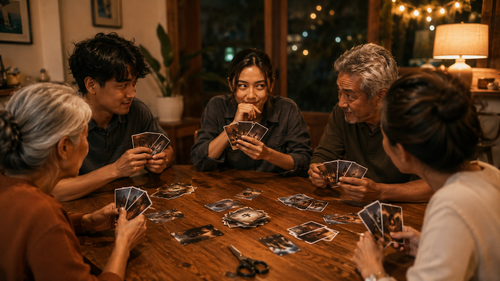
But I've also been to magic game nights. Where the energy was electric. Where everyone was laughing, engaged, and fully present. Where the conversation continued in the group chat for days afterwards. Where people asked the host, unprompted, when they were doing it again.
What's the difference?
It's not the games themselves—though those matter. It's not the food or drinks—though those help. It's the hosting. The preparation. The understanding of what makes a game night actually work.
Here's everything I've learned about throwing game nights people genuinely want to attend.
PART ONE: BEFORE THE NIGHT
Know Your Crowd
This is the foundation. The biggest mistake hosts make is picking games they personally love without considering who's actually coming.
Ask yourself:
- Are they gamers? People who play regularly can handle complex rules and long play times. People who don't need simpler entry points.
- Are they competitive? Some groups thrive on cutthroat competition. Others get genuinely upset when someone's strategy targets them. Know which you're dealing with.
- Are they performers? Games with acting, bluffing, or social deduction require people who are comfortable being "on." Not every group has that energy.
- What's the social dynamic? Are they all close friends who can handle heated accusations? Work colleagues who need to stay professional? A mixed group where some people don't know others?
Your game selection should fit the answers.
Cap the Guest List
More people ≠ more fun. In fact, it usually means the opposite.
Large groups create predictable problems: long wait times between turns, side conversations that derail the game, some people checking out because they feel like they're not really participating.
The sweet spot for most games: 4-6 people. Small enough that everyone stays engaged. Large enough to create interesting dynamics.
If you have a larger group (8+), consider running two simultaneous games rather than forcing everyone into one activity. Or choose games specifically designed for large groups, accepting that the experience will be different.
Choose Games That Create Moments
Here's a secret about memorable game nights: no one remembers who won.
What they remember are moments. The hilarious bluff that somehow worked. The shocking betrayal. The unexpected comeback. The accusation that got everyone yelling.
Some games are moment-generators. Others are functional but forgettable. Choose accordingly.
Moment-generating categories:
Deception Games: Secret Hitler, The Resistance, One Night Werewolf, Coup. These create paranoia, accusations, and dramatic reveals. High-energy, high-emotion.
Party Games: Codenames, Wavelength, Telestrations, Just One. These create shared laughter and "how did you even think of that" moments.
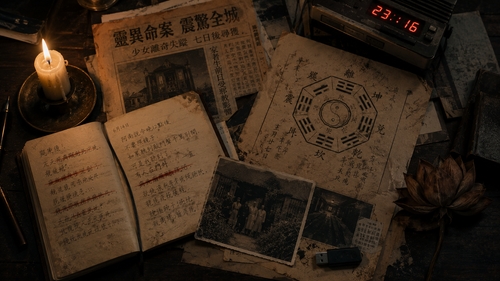
Mystery Games: Detective-style games where you solve a crime together. These create collaborative investigation, theory-building, and that satisfying moment when everything clicks into place.
Strategy Games with Interaction: Catan, Ticket to Ride, Cosmic Encounter. These create negotiation, rivalry, and memorable plays.
The category you choose depends on your crowd. But within each category, choose games that have high moment potential.
Prepare More Than You Think You Need
Have a backup game ready. Sometimes a game falls flat with a particular group. Sometimes it ends faster than expected. Sometimes half your guests are running late and you need something quick to start with.
Print any materials that need printing. Punch out any cardboard tokens. Make sure nothing's missing from the box. Set up what can be set up in advance.
The difference between a smooth game night and a messy one often comes down to preparation.
PART TWO: THE LOGISTICS
Food Strategy
Finger foods beat fork-and-knife meals every time. You want people focused on the game, not their plates. You want hands free to hold cards, roll dice, reach across the table.
What works:
- Charcuterie boards or snack spreads people can graze throughout
- Pizza (the universal game night food for a reason)
- Sliders, wings, or other handheld appetizers
- Chips/dips/easy finger foods
- Desserts that don't require utensils
What doesn't work:
- Full plated meals that require everyone to stop playing
- Messy foods that get on cards and components
- Anything that requires constant attention to eat
Drink Setup
Self-serve is key. You don't want to be playing bartender all night—you want to be playing the game.
Set up a station with options: beer, wine, a simple cocktail if you're feeling fancy, non-alcoholic alternatives. Let people serve themselves.
Keep water easily accessible. Games get intense, people forget to hydrate, and nothing kills a game night like someone getting sloppy drunk because they didn't realize how much they were drinking.
Space Setup
Clear the table of clutter. Make sure everyone has comfortable seating with good sightlines to the play area. Have adequate lighting—too dim and people can't read cards; too harsh and it kills the atmosphere.
For certain games—especially mystery or deduction games—you can lean into atmosphere. Dim overhead lights, add lamps or candles, put on an ambient playlist. It transforms the experience from "we're playing a game" to "we're doing something special."
PART THREE: RUNNING THE NIGHT
The Warm-Up Game
Don't start with your main event. People arrive at different times, some need to decompress from their day, and jumping straight into a complex game is jarring.
Start with something light. A quick party game. A simple card game. Something with minimal rules that gets people laughing and talking while you wait for everyone to arrive.
Then transition to the main event.
Explaining Rules
This is where so many game nights go wrong.
Do:
- Explain the goal first ("You're trying to accomplish X")
- Cover the essential mechanics ("On your turn, you can do A, B, or C")
- Start playing and explain details as they come up
- Keep it moving—people learn better by doing
Don't:
- Read the entire rulebook aloud
- Explain every edge case before starting
- Use jargon people don't understand
- Make people feel stupid for asking questions
For complex games, consider having everyone watch a 5-minute "how to play" video beforehand. It's faster and clearer than verbal explanation.
Energy Management
Read the room throughout the night.
If energy is dropping—people checking phones, conversations happening outside the game—you need to either inject some excitement or wrap up the current game.
If energy is high—laughter, engagement, people literally leaning forward—ride that wave.
The best hosts are constantly calibrating. They know when to push forward and when to pivot.
When to End
This is crucial: end on a high note.
Better to have people leave wanting more than to drag the night out until everyone's exhausted and secretly checking Uber prices. If your main game ends and the energy is good, you can offer a quick second game—but make it optional and genuinely shorter.
A natural end point: when you notice more than half the group starting to fade. Call it before they have to make excuses.
PART FOUR: GAME RECOMMENDATIONS BY SITUATION
For Groups Who Love Drama and Accusations
Mystery RPG games work incredibly well here. There are games where all 4 players are suspects in a murder—no host needed, everyone has secrets, and the accusations fly naturally.
One example: a Paris-set mystery where a tour guide is found dead and four tour group members become suspects. Each player has their own secrets and timeline. You open sealed evidence rounds together. By the end, people are pointing fingers, defending alibis, and getting heated (in a fun way).
This format creates guaranteed drama. Even innocent players have dark secrets they're trying to hide, so everyone looks guilty.
For Groups Who Want to Work Together
Cooperative games shine here. Pandemic, Spirit Island, Mysterium, or detective-style case file games where the whole group works as an investigation team analyzing evidence together.
The case file format is particularly good for this: spread documents across the table, divide up evidence to review, come together to share findings and build theories. It's collaborative problem-solving with a narrative wrapper.
For Large Groups (7+)
Codenames, Wavelength, Two Rooms and a Boom, or party games designed for higher player counts. Accept that the experience will be different from an intimate 4-player game—more chaos, more laughter, less depth.
For Competitive Strategy Lovers
Catan, Ticket to Ride, Wingspan, Terraforming Mars. Games with clear rules, meaningful decisions, and satisfying wins.
For Mixed Groups (Some Gamers, Some Not)
Choose games with simple rules but genuine depth. Codenames is perfect—explain it in two minutes, but the actual gameplay rewards clever thinking. Same with Wavelength, Decrypto, or lighter mystery games.
For Date Nights (Couples)
Two-player games designed for couples: Patchwork, 7 Wonders Duel, Jaipur. Or mystery games that work for exactly two people—some case file-style detective games are actually ideal for couples who want to play detective together.
PART FIVE: THE SECRET SAUCE
Here's what separates great game nights from good ones:
Intentionality
Everything I've described takes effort. It's easier to just throw out some games and see what happens. But that extra preparation—curating the guest list, choosing the right games, setting up the space, managing the flow—transforms the experience.
Making People Feel Welcome
Greet people when they arrive. Introduce anyone who doesn't know each other. Make sure no one feels lost during game explanations. Check in with quieter guests to make sure they're having fun.
The social hosting matters as much as the game selection.
Letting Go of Perfection
Sometimes a game doesn't land. Sometimes conversations veer off track. Sometimes the night goes completely differently than planned. That's fine. The goal isn't executing a perfect agenda—it's having a good time together.
Following Up
After a great game night, drop a message in the group chat. Share a funny moment. Ask when people want to do it again. The social fabric matters.
The Framework
Here's a simple structure that works:
6:00 PM — First guests arrive, drinks and snacks available 6:30 PM — Warm-up game while waiting for everyone 7:00 PM — Main event game begins 9:00 PM — Main game ends, optional second game or open conversation 10:00 PM — Natural wind-down
Adjust timing based on your games and your crowd, but this rhythm tends to work well.
Final Thought
The best game nights aren't about the games.
They're about creating space for genuine connection. Putting phones away. Looking at each other. Laughing together. Experiencing something shared.
Games are just the vehicle. Your job as a host is to choose the right vehicle and drive it well.
Do that, and people will remember your game nights—not because of who won, but because of how it felt to be there.